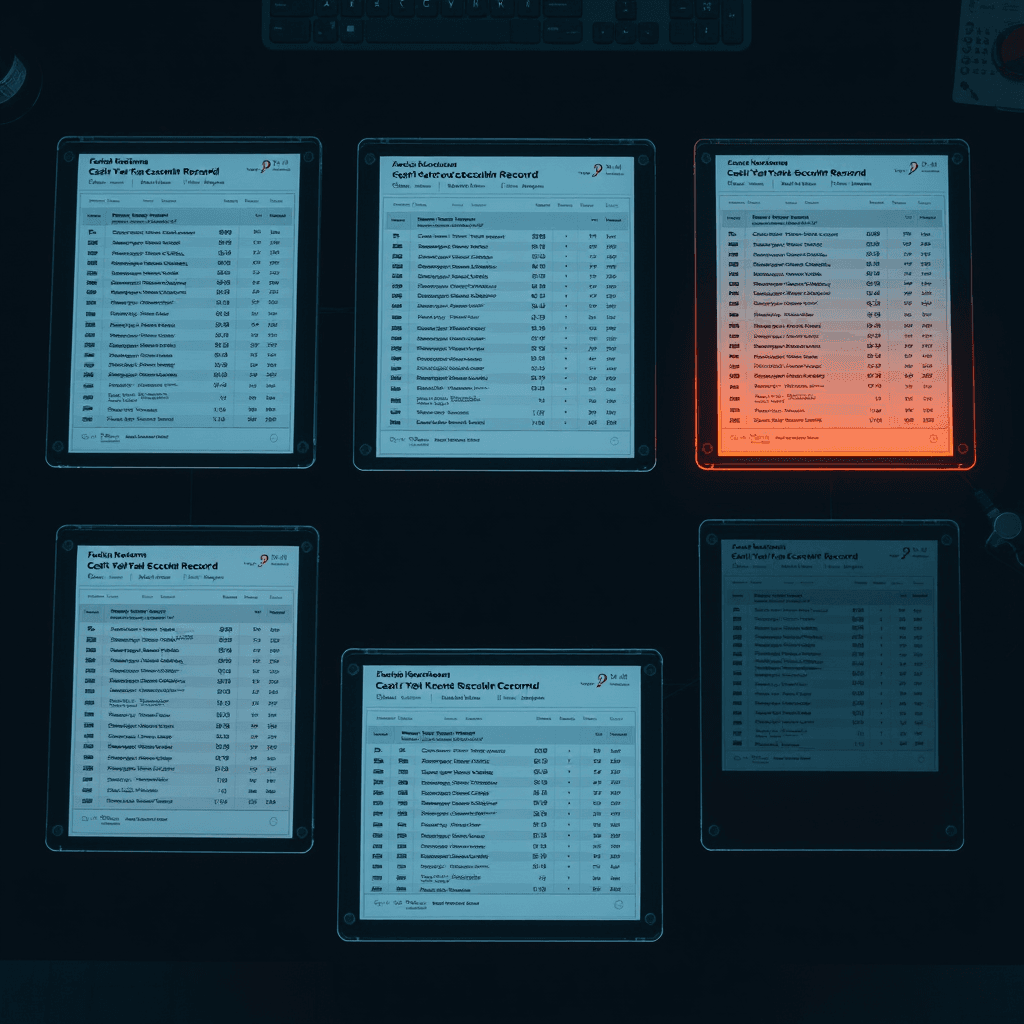
Somebody pulls a revenue number from the ERP. Somebody else pulls it from the CRM dashboard. The numbers don't match, and the next twenty minutes of the meeting are spent litigating whose report is right instead of deciding what to do. Every company that runs more than two systems has had this meeting.
The instinct is to blame the integration. Usually the integration is working exactly as built. The real problem is that nobody ever decided which system is allowed to be right.
Sync Is a Mechanism, Not a Decision
An integration moves data between systems. It does not decide which version of the data is correct. If your CRM lets a salesperson edit a billing address and your ERP lets accounting edit the same billing address, and a sync runs both directions, you have built a system where the last person to type wins. Nobody designed that outcome. It's just what happens when ownership is undefined.
This gets worse as you add tools. A website form writes a customer record. A support platform updates a phone number. A marketing tool appends a company name pulled from an enrichment service. Each write is reasonable on its own. Together they produce a record that nobody trusts and everybody quietly works around by calling the customer to confirm.
Write the Ownership Map
The fix is unglamorous and cheap: decide, in writing, which system owns each fact. Not each record — each fact. A customer record is not owned by one system. Different fields within it can reasonably belong to different teams.
A simple ownership map covers the fields that actually cause arguments:
- Pricing and discounts — usually the ERP, because that's where margin lives
- Inventory counts — the system connected to physical movement, not the storefront
- Contact and company details — often the CRM, since sales touches them most
- Billing address and payment terms — accounting's system, no exceptions
- Order status — whichever system processes fulfillment, with everything else reading from it
For every field, one system writes. Everything else reads. That's the whole rule.
The map doesn't need to be a formal document. A shared spreadsheet with three columns — field, owning system, who can change it — is enough to settle most disputes permanently. The value isn't in the artifact. It's in forcing the conversation while everyone is calm, rather than during a month-end close.
Two-Way Sync Is Usually a Symptom
When someone asks for bidirectional sync on a field, it's worth asking why before saying yes. Often the real request is "I need to see this data over here," which is a read problem, not a write problem. Sometimes it's "the owning system is too slow or annoying to update," which is a workflow problem that a sync will paper over rather than solve.
There are legitimate cases where two systems genuinely need to write the same field. When that happens, don't leave it to timing. Set an explicit precedence rule — this source always wins, or this one wins only when the other field is empty — and make the losing write visible in a log rather than silently discarded. Silent overwrites are the ones that surface six weeks later as a shipping error.
Where the Discipline Pays Off
Ownership mapping looks like housekeeping until you try to do something ambitious on top of your data.
Reporting gets simple. If there's one owner for revenue recognition, there's one number, and dashboards stop being opinions.
AI gets usable. Any assistant or agent you point at your business data inherits its contradictions. Ask a model to summarize an account and give it three conflicting addresses, and it will confidently pick one. Clean ownership is a prerequisite for AI that you'd actually let talk to a customer.
Onboarding gets faster. "Where do I update this?" is one of the most common questions new hires ask, and one of the most expensive to answer inconsistently.
And new integrations get cheaper. When ownership is defined, adding a system is a matter of wiring reads. When it isn't, every new tool triggers another round of negotiation about who controls what.
Start Where the Arguments Are
You don't need to map every field in your stack. Start with the five or six facts that have caused a real disagreement in the last quarter — the ones people have learned to double-check manually. Those are the fields where ownership is genuinely contested, and they're where clarity buys back the most time.
Then make the map real. Turn off write access in the systems that shouldn't have it. A rule nobody enforces is just a note.
If your systems are arguing and you'd rather not referee, that's the kind of untangling we do — mapping ownership, rebuilding the flows, and unifying the tools into a hub your team can actually trust. Let's talk about what's fighting in your stack.