A surprising number of AI pilots end with everyone agreeing the technology worked. The summaries were good. The classifications were accurate. The draft replies were usable. And then, three months later, nobody is using it.
That's not a model problem. It's a workflow problem. The pilot produced output, but no one decided where that output was supposed to go, who was accountable for acting on it, or what happens when it's wrong. A demo ends when the result appears on screen. Real work only starts there.
The gap between "it works" and "it's used"
Most pilots are evaluated on quality of output. Production systems are judged on something else entirely: whether they reduce the number of decisions a human has to make in a day without adding new ones.
If an AI tool drafts a quote but a person still has to open a different system to check inventory, copy the numbers into the ERP, and email it manually, you haven't removed work. You've added a review step. The team will quietly route around it within a few weeks, and the pilot will be remembered as "AI didn't really fit our business."
The fit was never tested. What got tested was the model.
Pick the workflow first, the use case second
Most teams start with "where could we use AI?" That question produces a list of interesting experiments. A better starting question is: which recurring workflow has a clear trigger, a clear owner, and a clear definition of done?
Those three properties matter more than how exciting the use case sounds.
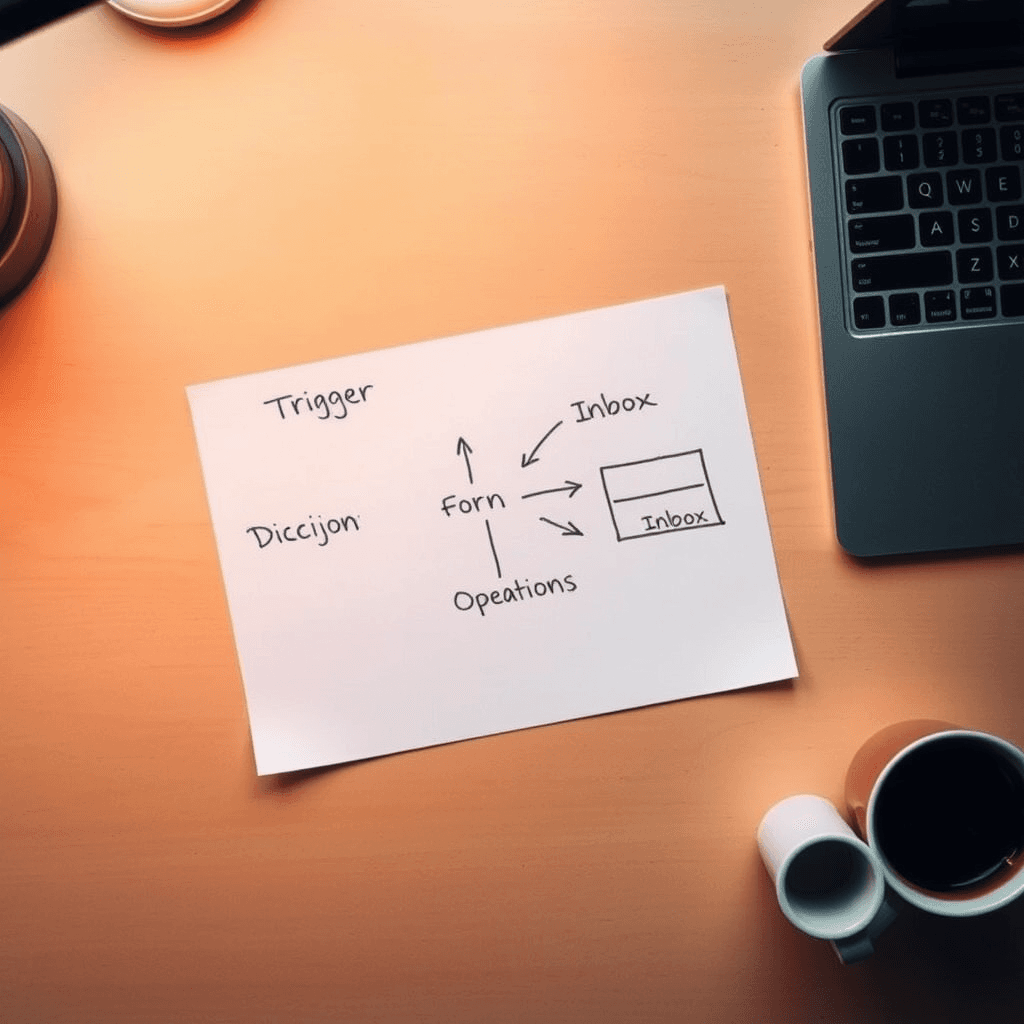
A trigger means something observable starts the process — an order arrives, a form is submitted, an invoice hits the inbox, a ticket changes status. If the trigger is "someone remembers to do this," automation has nothing to hook into.
An owner means one role is accountable for the outcome, not a committee. When the output is wrong, someone's job is to notice and fix it.
A definition of done means you can tell, without debate, whether the work was completed correctly. "Draft a better marketing strategy" fails this test. "Categorize this expense and attach it to the right project" passes it.
Workflows that score well on all three are where AI quietly compounds. Workflows that score poorly are where pilots go to die, no matter how good the underlying tool is.
The unglamorous half nobody budgets for
The model is maybe a quarter of the work. The rest is plumbing most teams underestimate:
- Input access. The AI needs the same context a competent employee would have — current pricing, customer history, open orders — pulled from systems it's actually permitted to read.
- Output destination. The result must land somewhere a person or system already looks: a record in the ERP, a field in the CRM, a queue someone works through daily. Not a separate dashboard.
- Exception handling. Define what happens on low confidence or missing data. Route to a human, flag it, and log why — don't let it guess silently.
- Logging and review. Keep a record of what was produced and what a human changed. That edit trail is the best training data you'll ever get about where the system is weak.
Skip these and you've built a toy. Build them and even a modest use case starts returning time every week.
Measure the workflow, not the model
Accuracy scores are a lab metric. The questions that determine whether a pilot graduates are operational: How long does this task take now versus before? How often does a human have to intervene? Is the backlog shrinking? Has anything downstream broken?
Set those measures before the pilot starts, with a baseline you can defend. Without a baseline, every result becomes a matter of opinion, and opinion rarely survives a budget review.
Also measure adoption honestly. If two of six people on the team use the tool, you have a design issue — the workflow probably doesn't match how the other four actually work.
Sequence for early value
Start where the data is already clean and the stakes are moderate. Internal workflows are usually better first candidates than customer-facing ones, because mistakes are recoverable and feedback is fast.
Get one workflow fully in production — triggered, owned, logged, measured — before starting a second. One finished system teaches your team more about what AI can and can't do in your business than five simultaneous experiments, and it gives you an honest internal reference point when the next vendor demo arrives.
The companies pulling ahead with AI aren't the ones with the most pilots. They're the ones who treat AI as a component inside a well-designed process, not as the process itself. That design work — mapping the workflow, wiring the systems, deciding what happens when it fails — is ordinary operations engineering. It's just applied to a newer kind of tool.
Where to start
If you have a pilot stuck in the demo stage, the fix usually isn't a better model. It's a decision about which workflow it belongs to and what it's allowed to touch.
We help operators make that call and build the integrations, data access, and process design underneath it. If you want to talk through a stalled pilot or pick a first workflow worth automating, reach out — a short conversation is usually enough to tell whether it's ready.